
Live Energy Data in the Resident App: Domus Case Study

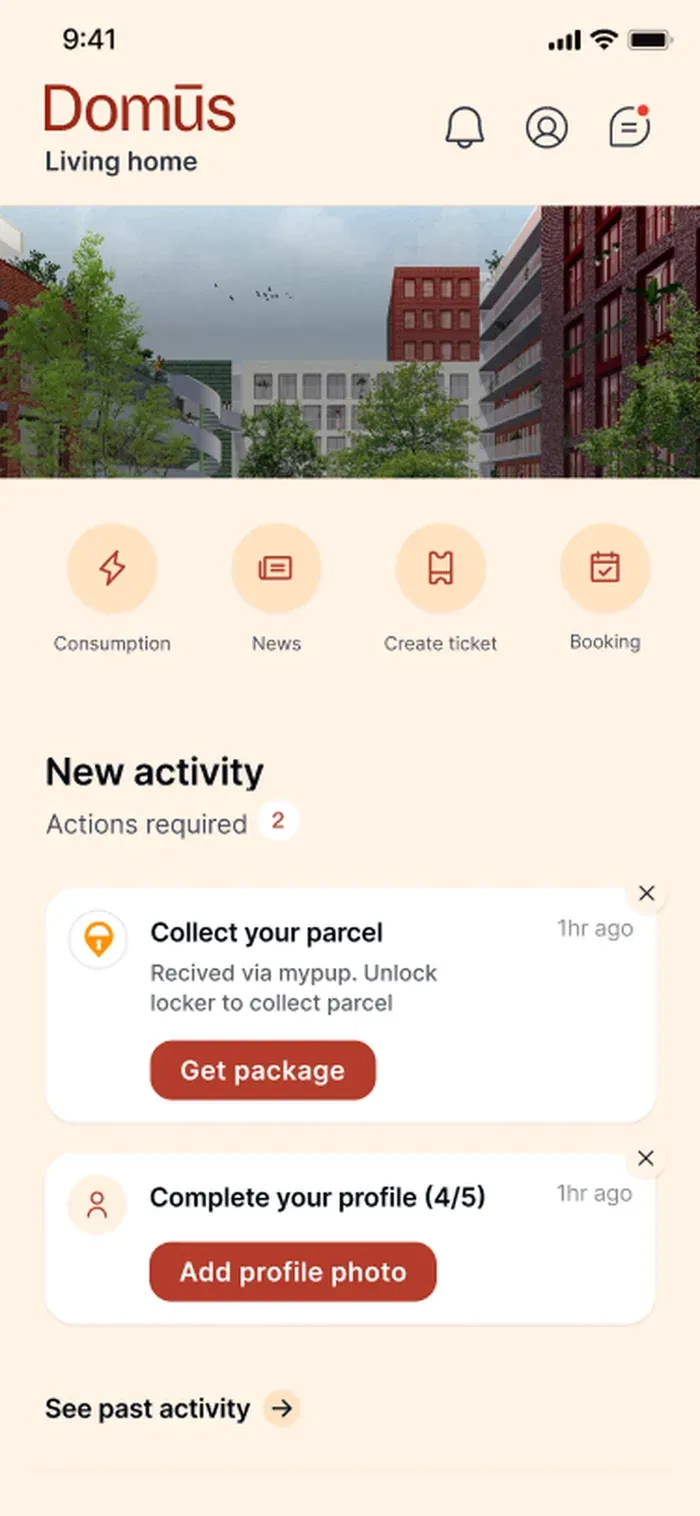
At Domūs, a 235-unit residential complex in Amsterdam Houthaven, every resident already uses one branded app for maintenance requests, bookings, parcels, and building news. That app runs on AIRE. Since our integration with Rhino, it also shows each household its own live utility consumption. No second app, no separate portal, no adoption campaign.
Our partner Rhino has published their side of this story. This is ours: what the integration looks like from inside the platform, and why we think the split of roles is the reason it works.
The situation
Utilities at Domūs are settled per apartment on actual consumption. That is the fair way to bill, but it came with a blind spot: between settlements, residents had nothing to look at. The first signal of a heavy month was the invoice itself.
That blind spot has a cost beyond surprise bills. A running tap or a failed appliance does not file a complaint. It just consumes, quietly, until settlement day. And when the invoice finally lands, the property manager spends time on disputes over numbers nobody could see along the way.
Why we did not build another energy app
The obvious fix sounds simple: give residents an energy dashboard. The problem is adoption. A separate energy app is one more download, one more login, one more password. Most residents never open it, and consumption data only works if somebody looks at it.
We already had the one thing an energy dashboard needs most: a place residents actually go. The Domūs app is where they report a leaking faucet, book a shared space, and check on a parcel. Putting consumption in that same place meant it would get looked at.
So instead of building meter infrastructure ourselves, we partnered with Rhino, an Amsterdam company that does exactly that: remote energy and utility monitoring, any asset class, any meter.
What changed
Rhino connects to the building’s existing meters and resolves consumption to individual apartments, across four utility types: electricity, gas, water, and heating. That per-unit data flows into AIRE through a single API connection.
On our side, AIRE holds the tenancy records, so we know which apartment belongs to which resident. Consent is handled in the app: a resident grants permission before their consumption is shown to them. Then their live usage appears alongside everything else they already manage.
The division of labor is deliberate. Rhino reads the meters and never builds a resident interface. AIRE runs the resident experience and never touches meter hardware. Each side does the part it is built for.
The result
Residents at Domūs now see their consumption during the billing period, while they can still act on it, not at settlement when it is history. Unusual usage stands out early, so a fault that would have surfaced as an inflated invoice can surface as a question in week one instead. And because residents watch the same numbers their bill is built on, settlement stops being an argument about invisible data.
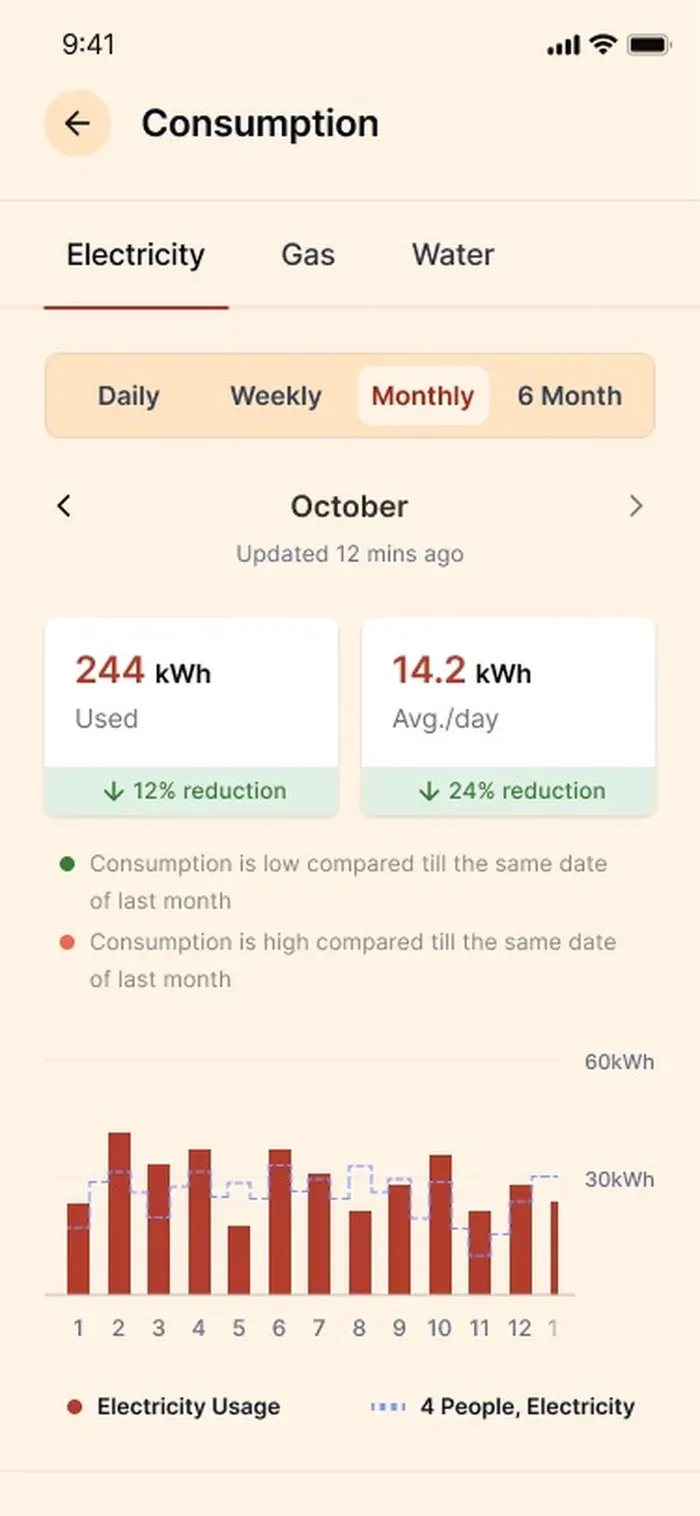
For property managers, that means fewer disputes to handle and earlier signals when something in a unit is quietly wasting energy or water.
What this means beyond Domūs
Energy data next to tenant data is where residential management is heading, not least with EPBD reporting obligations approaching. Our roadmap builds on exactly this pattern: energy monitoring and ESG reporting connected to the same platform that already runs building operations and the tenant experience.
If you manage residential buildings day to day, or you are an asset manager thinking about utility transparency across a portfolio, we are happy to walk you through it.
FAQ
Do residents need to install a separate app to see their energy use?
No. Consumption appears inside the same branded resident app they already use for maintenance requests, bookings, parcels, and building news. There is no second login.
Who reads the meters?
Our partner Rhino connects to the building’s existing meters, validates the readings, and delivers per-unit consumption data to AIRE through one API. AIRE never touches the meter hardware.
How is resident privacy handled?
Residents grant consent in the app before their consumption data is shown. AIRE holds the tenancy records and manages that consent; each household sees its own usage.
Can this work in my building?
The Domūs setup uses the building’s existing meters, so no rewiring was needed there. Whether the same applies to your building depends on your meters. Book a walkthrough and we will look at it together.